Welcome to Transport and Climate Change Week 2026!
For nearly a decade, Transport and Climate Change Week has brought people together to do something simple but essential: exchange knowledge, build trust, and strengthen the partnerships that make sustainable transport possible. Now in its 9th edition, the conference will take place fully online from 5 to 9 October 2026, welcoming decision-makers, experts, and practitioners from every region. Past editions have reached up to 1,500 participants and over 200 partners, a reflection of how much this community has grown, and of how valuable a trusted space for collaboration has become.
This year’s motto, Partnering for Action: Global Alliances and Opportunities for Decarbonising Transport, reflects a conversation the transport sector cannot postpone. As cooperation adapts to a changing world, becoming more agile and more shaped by the countries doing the work, the week will bring together the people and institutions who can turn that shift into real progress for the climate and for the communities transport serves.
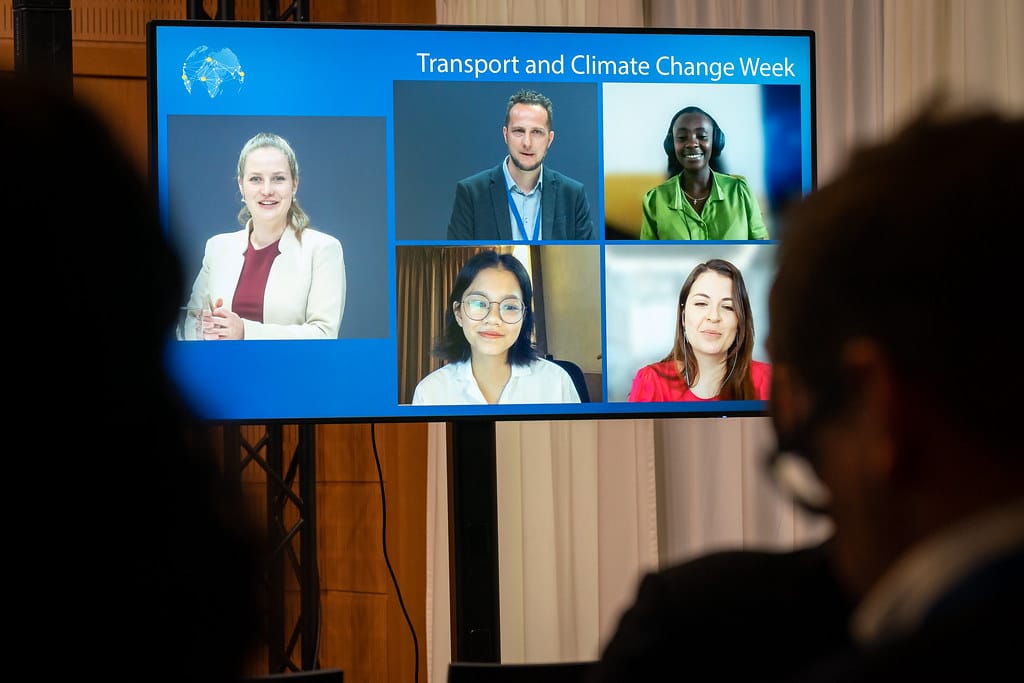
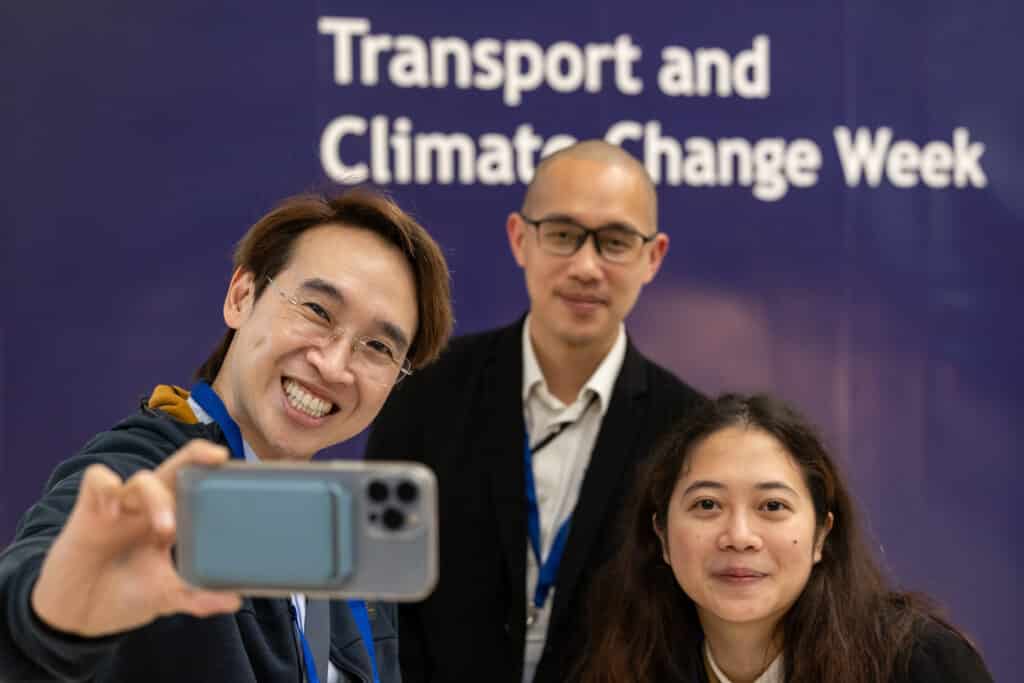

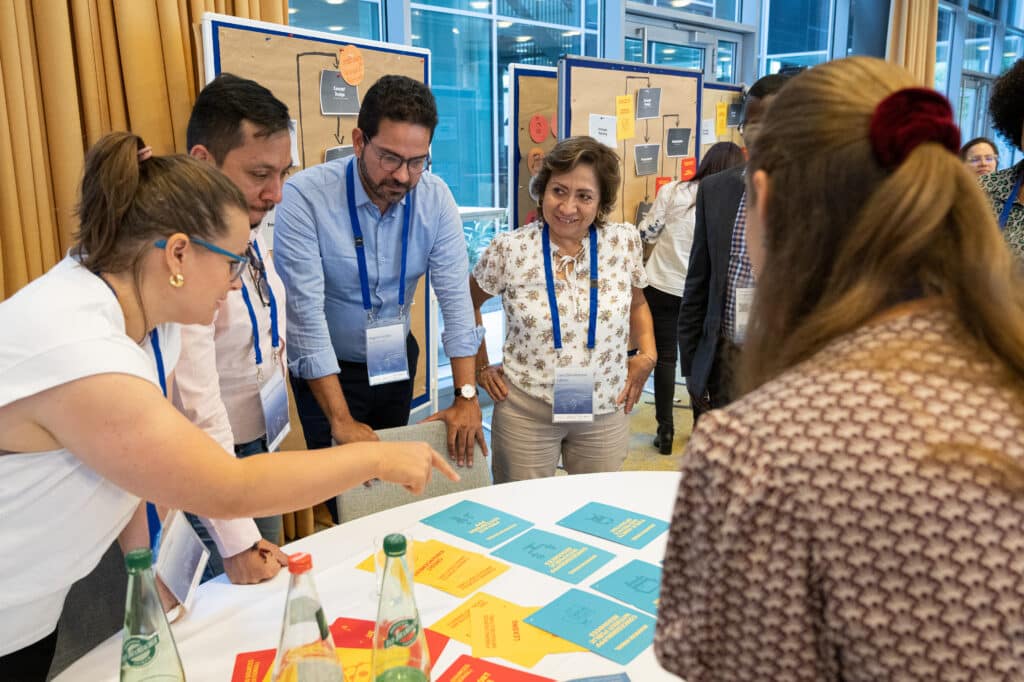
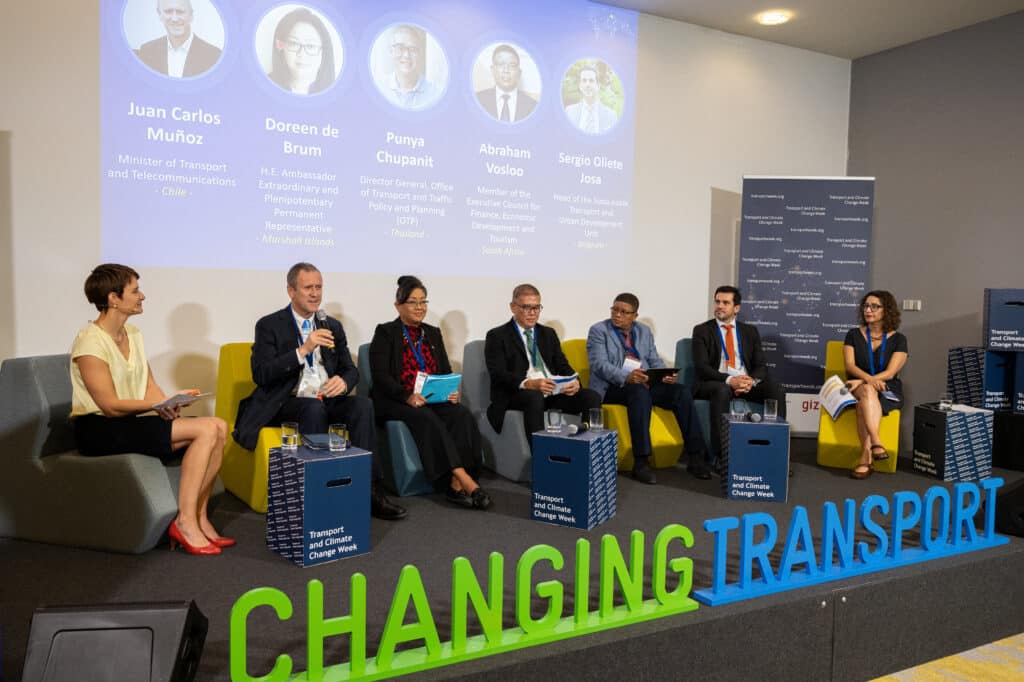

The event is organised by the Deutsche Gesellschaft für Internationale Zusammenarbeit (GIZ) GmbH on behalf of the Federal Ministry for the Environment, Climate Action, Nature Conservation and Nuclear Safety (BMUKN), financed by the International Climate Initiative (IKI). For any questions please don’t hesitate the conference team via transportweek@giz.de.
Programme overview
For a preview of the whole week, you can click here.
Building Sustainable Alliances
Welcoming & Opening Remarks

Public budgets for international transport cooperation are under growing pressure. The United Kingdom is reducing its international climate finance by roughly half over 2026–2029 compared with the previous period, and Germany and several other traditional donors are cutting official development assistance too, just as the Paris Agreement calls for a rapid, large-scale transformation of the transport sector. This session argues that scarcity can also be a catalyst: when public money is tight, donors and implementers have a stronger incentive to coordinate, co-finance and innovate rather than duplicate effort. Drawing on real examples, from regional IKI programmes that are implemented by consortia, to partnerships such as MobiliseYourCity, the Transport Data Commons Initiative and the GCF co-financed E-Motion programme, the session first asks implementers (GIZ, UNEP, AFD) what has worked in practice, then puts these examples to donors (BMUKN, FCDO, DG INTPA, GCF) in a panel discussion on what it would take to turn coordination into genuine, resource-efficient alliances.

Till Tibbe
Federal Ministry for the Environment, Climate Action, Nature Conservation and Nuclear Safety
Visit profile

Giorgia Favero
European Commission’s Directorate-General for International Partnerships (DG INTPA)
Visit profile






Birgit Schwenk
Federal Ministry for the Environment, Climate Action, Nature Conservation and Nuclear Safety (BMUKN)
Visit profile
By invitation only
On behalf of the Federal Ministry for the Environment, Climate Action, Nature Conservation and Nuclear Safety (BMUKN), this closed-format session brings together partner organisations implementing sustainable mobility projects under the International Climate Initiative (IKI). Participants will exchange insights and experiences from IKI projects and engage in discussion with BMUKN.
This session is by invitation only. Invited participants will receive further details directly.
Implementing Partnerships for Action
Project Practices
Developing vehicle regulations for efficiency and electrification is a journey that requires strong partnerships, technical expertise, and sustained capacity building. This session showcases experiences from India, Kenya, and Thailand, highlighting how governments, technical experts, and other stakeholders have worked together to develop and implement effective regulations. Speakers will share key steps, milestones, challenges, and capacity-building approaches from their respective country journeys, offering practical lessons and insights that participants can adapt to advance vehicle efficiency and electrification policies in their own countries.




Eastern EU & The Balkans Experience
This workshop brings together representatives of national and local authorities, regional organisations, development partners, and financial institutions to exchange experiences and showcase practical solutions for advancing climate-resilient urban mobility in the Western Balkans. Building on the Declaration for Green Mobility for the Western Balkan Countries and Observing Participants, and the Policy Framework and Roadmap for Integrated Sustainable Urban Mobility for the Western Balkans, the workshop will present complementary initiatives, demonstrate pilot actions, promote regional cooperation, and explore opportunities for scaling up investment in sustainable, climate-resilient urban mobility.







Projects Perspective
The Transport and Climate Change Week focused on exchange of knowledge, building trust, and strengthening the partnerships that make sustainable transport possible. This session builds on this foundation by putting focus on public transport. Public transportation is a critical and essential component of mobility worldwide. The session rides on ongoing momentum to ensure everyone has access to safe and reliable mobility worldwide. This session puts a spotlight on initiatives that are working towards making sure mobility is now economically sound, environmentally friendly, and socially inclusive. Speakers are drawn from different parts of the world and will seek to highlight how their efforts are leading to real progress for the climate and for the communities’ transport serves.





Maritime Perspective
- Testing electric vessels for fishery and Coast Guard in Grenada, Caribbean
- From planning to implementation support: e-ferries in a public transport system?
Be inspired by is a session presenting innovation in vessels and public transport. Colombia will present an overview of the early cooperation between the City of Cartagena and the C40 Cities Finance Facility (implemented by C40 and GIZ) to advance one of Cartagena’s most prominent projects yet to be realised: a maritime public transport system – the first of its kind in Colombia. The project seeks to leverage the city’s water-based geography to expand its transportation network beyond land-based modes through low-emission ferries. From Grenada, Giovanni Buckle (CCREEE) will present the design of a pilot in Grenada, Caribbean, where electric boats with solar charging will be tested for small scale fishery and the Coast Guard. The pilot is carefully designed in order to preserve and develop capacities in local boat building, and ensure availability of technology as well as delivering boats that are fit-for-purpose. The boats will be equipped with telematics to ensure learning for the region.


PtX Side Event
Methanol is emerging as a key lever to defossilise shipping and aviation. This webinar explores how this versatile feedstock can be sourced decentrally, and scaled for downstream e-fuel production, following the PtX.CarbonRun approach. A country case provides an application perspective: In Ethiopia, leveraging the countries potentials for e-fuel production is taking up speed. Here, startup developer Solarbelt leverages locally abundant residual biomass to produce e‑methanol for shipping and chemical markets. We will also gain insights on the potential of e-methanol from the research perspective looking at the defossilisation of the European chemical industry (tbc confirmation Jenna). The session will host a panel discussion with experts from industry and research. Join for insights and an interactive Q&A on opportunities and challenges




Symposium Day: Mobilising Innovation
Welcoming Words and Key Note
Link not working? Join with the meeting ID instead:
Meeting ID: 367 037 669 700 324
Passcode: Qc2CB6RG
The disruption to energy flows through the Strait of Hormuz in June 2025 has demonstrated how quickly geopolitical tensions can translate into energy insecurity. Fuel-price volatility and higher transport costs put pressure on households, businesses and governments across regions with very different capacities to absorb it. More than a year on, the episode still shapes how governments think about energy security, and it has sharpened rather than settled the debate about how transport systems should be built for the next disruption.
For some countries, the immediate priority may be energy affordability and security. Others invest in electrification, alternative fuels, public transport or new infrastructure. Both responses are rational, but they are pulling policy attention and investment in different directions. The session examines whether energy security and the sustainability agenda can be reconciled rather than treated as competing priorities, and what the past year of volatility means in practice for transport policy and investment going forward. The aims is that participants take a sharper, shared vocabulary for discussing energy security and transport decarbonisation together, and with concrete reference points to carry into the sessions that follow across the symposium.

Dr. Philipp Behrens
Federal Ministry for the Environment, Climate Action, Nature Conservation and Nuclear Safety (BMUKN)
Visit profile

Carly Gilbert-Patrick
International Partnership on Sustainable Low Carbon Transport (SLOCAT)
Visit profile

Project Practices
This Session explores how African cross-border corridors can improve transport efficiency and regional integration while leapfrogging towards cleaner, more resilient transport systems. The session connects transport planning with local economic development: corridors should move freight reliably and reduce emissions, while also improving market access, supporting local value chains and creating opportunities along the route. The discussion draws on European corridor experience, African implementation priorities, research and development finance.
The session begins with five concise expert inputs. The inputs establish a common foundation on integrated transport systems, green leapfrogging, African corridor priorities, finance and local development.
The second part uses a Green Corridor Stress Test to structure the panel discussion. A short fictional corridor links a port, cities, an inland logistics hub, agricultural and industrial areas, a copper mine and a neighbouring landlocked market. The case serves only as a common frame for discussion. Speakers do not assess or solve the fictional project. They identify what matters for any corridor to become integrated, low-carbon, climate-resilient and locally beneficial.
All stress-test questions and the illustrative corridor will be shared before the session. Preparation remains minimal: speakers only need to consider the questions and select examples from their own experience. During the session, the moderator directs each test to two lead respondents, invites one short challenge and brings in one audience reaction. The format concludes with a concise set of minimum conditions for green transport corridors.




Africa Regional Perspective
This session highlights “turning points” enabling sustainable transport in Africa including the landmark African Union Continental Framework for Electric Mobility leading to COP32 in Ethiopia. African countries are advancing the electric mobility sector through accelerating national policies and private sector-led innovation. The continent is effectively leveraging e-mobility to scale industrialisation, green jobs, and socio-economic growth, replacing hight cost of refined fuel imports with cheaper domestically produced renewable energy. The session also unpacks the role of funding mechanisms to unlock private investment and climate finance for sustainable transport across African nations.





Allan Muhumuza
Science, Technology, and Innovation Secretariat - Office of the President (STI-OP)
Visit profile





Global Alliance for Feminist Transport Side Event
What if gender-responsive approaches could do more than raise awareness – and become a catalyst for innovation and transformation in transport? This session brings together regional experiences to explore how partnerships across the public, private, and development sectors can turn diverse mobility needs into opportunities for better solutions. From safer and more inclusive public transport to mobility of care, accessibility, and women’s participation in logistics, speakers will share lessons from projects translating gender perspectives into action. Together, we will explore how cross-sector collaboration can unlock innovation, strengthen impact, and help shape a more inclusive, sustainable, and people-centred transport transition.



Yashasvi Mund
Logistics Division, Department for Promotion of Industry and Internal Trade (DPIIT), Ministry of Commerce and Industry (MoCI), Government of India
Visit profile

Scaling Impact through Cooperation
Green Reefers in Maritime Transport Side Event
How can we accelerate the transition towards more climate-friendly refrigerated transport? And what does my daily banana, mango or vaccines to do with decarbonizing transport? This session explores how cooperation between development partners and the private sector can help bridge this gap. Drawing on the collaboration between GIZ’s Greener Reefers project, Kuehne Climate Center and Thermo King, speakers will discuss practical experiences, lessons learned and the conditions needed to move from pilot initiatives to pushing the shipping industry for safe, energy-efficient and safe maritime freight containers.



Asia Regional Perspective
Under the motto “Scaling Impact through Cooperation”, this session provides a platform to exchange experiences and lessons on how collaboration can enable the scaling up of project results and implementation. Drawing on perspectives from across Asia, participants will discuss the opportunities and challenges of working through regional networks and partnerships to advance transport sector transformation. The session explores how collaboration across countries, institutions, and initiatives can strengthen learning, create synergies, and support the broader uptake of successful approaches. The discussion aims to generate a shared regional perspective on how cooperation can create momentum for greater and more sustained impact.
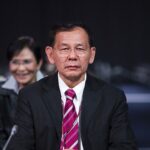


Shri. Prashant Kumar
Logistics Division, Department for Promotion of Industry and Internal Trade, Ministry of Commerce and Industry, Government of India
Visit profile
Transport Data Commons (TDC) Side Event
Transport data is only as powerful as the trust and cooperation behind it. Political commitments to decarbonise transport are only as strong as the evidence that can hold them accountable, and building that evidence means connecting actors who don’t always know each other, but each hold a piece of the picture. This session brings together three different scales of that ecosystem. A government voice, Dominican Republic, presenting the Ministerial Declaration on Transport Decarbonization launched at COP30 on behalf of the eleven endorsing countries, shows why data is the infrastructure behind political promises: national commitments only carry weight if they can be tracked and reported. A regional voice, the Centro de Movilidad Sostenible de Latinoamérica (CMS), shows how data is collected on the ground across Latin America, and what it takes to turn that evidence into something operational and locally owned. And a thematic voice, the Global Alliance for Feminist Transport, shows that even solid regional data can still leave people out unless it is disaggregated: data quality is not only technical, but also about who gets counted and whose needs shape policy. Together, we ask: what does it take to build trust, shared evidence, and cooperation across contexts, so that data becomes not just information, but a lever for inclusive, implementable transport decarbonisation?
The Transport Data Commons (TDC), which organises this conversation, already offers a portal where these connections are put into practice, bringing together data, standards, and community in one open, accessible space. The TDC is made possible through the support of partners and funders such as Foreign, Commonwealth and Development Office (FCDO) of the UK Government and the International Climate Initiative (IKI) of the Federal Government of Germany, anchored in the German Federal Ministry for the Environment, Climate Action, Nature Conservation and Nuclear Safety (BMUKN).




Carly Gilbert-Patrick
International Partnership on Sustainable Low Carbon Transport (SLOCAT)
Visit profile

Eng. Pamela Mercedes Abreu Toribio
National Council for Climate Change and Carbon Market
Visit profile

Latin America Regional Perspective
Public transport faces a structural challenge: maintaining service quality when fare revenues are increasingly insufficient to cover operating and investment costs. Changes in mobility patterns, rising operating costs, technological modernization, and difficulties in adjusting fares are placing growing financial pressure on operators and local governments.
So, can public transport continue to depend primarily on payments made by its users? Public transport generates benefits that go far beyond those who directly use it: it helps reduce congestion, improves access to jobs and services, lowers emissions and pollution, and promotes social inclusion, among other benefits. From this perspective, its financing can be understood as a shared responsibility among users, governments, and other actors who benefit from an efficient mobility system.
This session aims to raise awareness of the importance of developing financial mechanisms that do not rely solely on fares, explore how cities across Latin America are addressing this structural challenge, and reinforce the message that the financial sustainability of public transport should matter to society.





Looking a Decade Ahead
Project Practices
The electrification of heavy-duty vehicles (HDVs) is entering a new phase. While early pilot projects have demonstrated the technical feasibility of electric trucks in various applications, the next challenge is enabling large-scale deployment in the future. Unlike passenger vehicles, electric heavy-duty vehicles introduce complex interactions between vehicle technologies, charging infrastructure, electricity systems, logistics operations and policy frameworks. Large-scale adoption will require coordinated planning across multiple sectors, including transport, energy, industry and finance.
Questions around charging infrastructure deployment, grid readiness, vehicle technology development, business models and supportive policies are becoming increasingly critical. Addressing these challenges requires moving beyond individual pilots towards an integrated approach that considers the entire ecosystem surrounding electric HDVs. This session brings together partners to discuss how to prepare for the next stage of electric heavy-duty vehicle deployment and how governments, industry and partners can coordinate actions to enable a successful transition.


Dr. Miao Tian
Vehicle Emission Control Center (VECC), Chinese Research Academy of Environmental Sciences (CRAES)
Visit profile


Link not working? Join with the meeting ID instead:
Meeting ID: 367 802 898 648 266
Passcode: R4rW6jg9
After having had a week of exchanges on the situation in countries and regions, the closing session is to look towards opportunities to, not only advancing transport, but positioning it as a key contribution to sustainable development. In this session we will exchange on opportunities for infrastructure and investment and the need of shifting towards integrated solutions that can generate job opportunities and commit to a climate agenda. We will close the week collecting remarks from key actors in our global network.
This session will welcome rapporteurs from each region to give feedback from their perspective, not only on the regions and countries situation, but also regarding how Transport week contributes to frame a sustainable future for transport. The conversation will happen with diversity of projects, from the experience of country-cluster, regional project, a global project and e Europe project.

Lucky Mutiara Pindan Rattekarua
Ministry of National Development Planning (Bappenas), Indonesia
Visit profile